

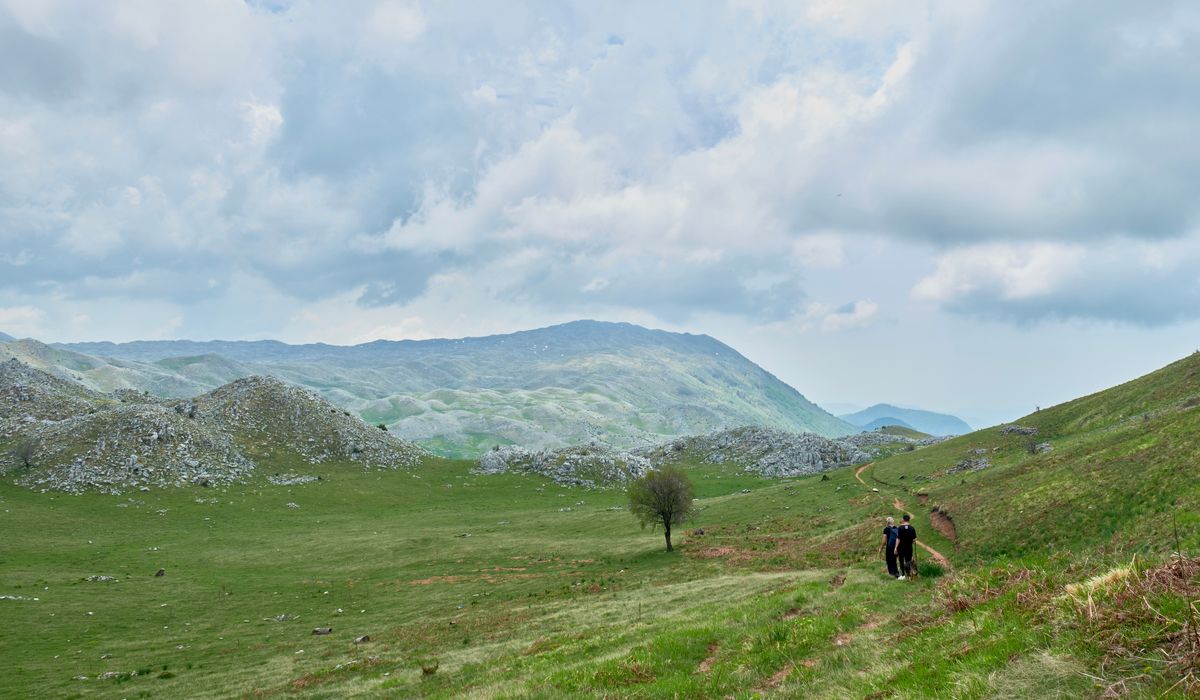
October Is the Woodland's Quietest Secret
By the first week of October, most of the summer crowds have packed up their picnic blankets and gone home. The woods, meanwhile, are putting on their best show. Oak and ash are still green, but beech, field maple and birch are already turning copper and gold, and every gust brings another drift of leaves down onto the path. The air smells of damp earth and leaf mould, the midges have largely gone, and you can walk for an hour without meeting another soul.
There is a practical bonus too. The ground is still warm from summer, so a crisp afternoon feels far less raw than a February one, and paths that were dusty in August are now firm and quiet underfoot — at least until the rain arrives.
Pick Your Moment — and Watch the Clock
Autumn light is the reason to go. A low sun behind a beech canopy turns the whole wood amber, and the best hour for it is the two hours before sunset. Overcast days are not a write-off, either: flat grey light makes the colours more saturated, and misty mornings give you spider webs strung between bracken and a hush that feels almost theatrical.
What you must not do is lose track of time. Through October the UK loses roughly three to four minutes of daylight a day, and sunset slides from around 6.45pm at the start of the month to about 4.40pm by the end. A walk that starts at 3pm in late October finishes in dusk, whether you planned it that way or not. Take a headtorch even on a short outing, and give someone your route and expected return time.
Kit That Earns Its Place in Your Pack
Wet leaves on top of roots, clay or stone are genuinely slippery, so this is not the season for smooth-soled trainers.
- Boots with deep lugs and a decent ankle cuff for muddy descents.
- Three layers: a merino or synthetic base, a fleece, and a waterproof shell that packs small.
- Walking poles, especially if your knees complain on steep downhill sections.
- A headtorch with fresh batteries, plus a spare set.
- Paper map and compass. Phone batteries drain fast in the cold, and signal vanishes in steep-sided valleys.
- Spare socks, hat and gloves in a dry bag. Wet feet end walks early.
- A sit mat so you can stop for your flask on a damp log without getting soaked.
What to Look For Once You're Among the Trees
Autumn is the busiest season in the wood if you know where to look. Jays are noisily caching acorns, grey squirrels are burying hazelnuts they will mostly forget, and the first redwings and fieldfares arrive from Scandinavia to strip the hawthorn and rowan berries. Goldcrests flit through conifer edges, and in the first half of the month you may hear the bellow of a red deer stag during the rut.
Fungi are the other great autumn spectacle. Fly agaric glows red under birch, sulphur tuft crowds dead stumps in vivid yellow, and penny buns push up through leaf litter on the woodland edge. Treat them all as photography subjects rather than food: identification is genuinely difficult, and many of the most attractive species are poisonous. Leave them for the deer and the slugs.
Learn to read colour by species, too. Beech holds green longest and then turns copper, birch goes butter-yellow, field maple glows yellow-green, and oak holds on to russet longest of all. A wood with a mix of species gives you a longer season than a single-species plantation.
The Flask: Small Effort, Huge Reward
A hot drink at the halfway point transforms a walk. Fill your flask with boiling water first, leave it five minutes, empty it, then fill with your drink — that pre-heating keeps things properly hot for hours.
- Spiced apple juice warmed with a cinnamon stick and a few cloves.
- Hot chocolate with a pinch of salt and a grating of nutmeg.
- Ginger, lemon and honey — the best thing for a raw October throat.
- Soup in a wide-mouthed flask, if you want something more substantial.
Pair it with flapjack, oatcakes and cheese, or a handful of dates. Eat before you feel hungry; cold weather masks appetite and then hits you halfway up a hill.
Leave It as You Found It
Stick to the main paths where you can. Leaf litter hides roots, stones and drainage gullies, and off-piste walking in autumn damages the very ground layer that next spring's bluebells depend on. Avoid standing under large trees in strong wind — sudden branch drop is a real risk when the canopy is heavy with rain — and keep dogs close and on a lead during the deer rut.
Ticks remain active well into November, so check yourself and your dog after every walk. Take everything home with you, including apple cores and banana skins, and leave the fungi, nuts and berries for the wildlife that depends on them. Then get home, put the kettle on, and start planning the next one.



John Doe
14 January, 2022Having no content in post should have adverse..
Chauffina Carr
10 April, 2022We use these tests all time! Killer stuff!
Jim Séchen
16 July, 2022Thanks for all the comments, everyone!